
Training courses
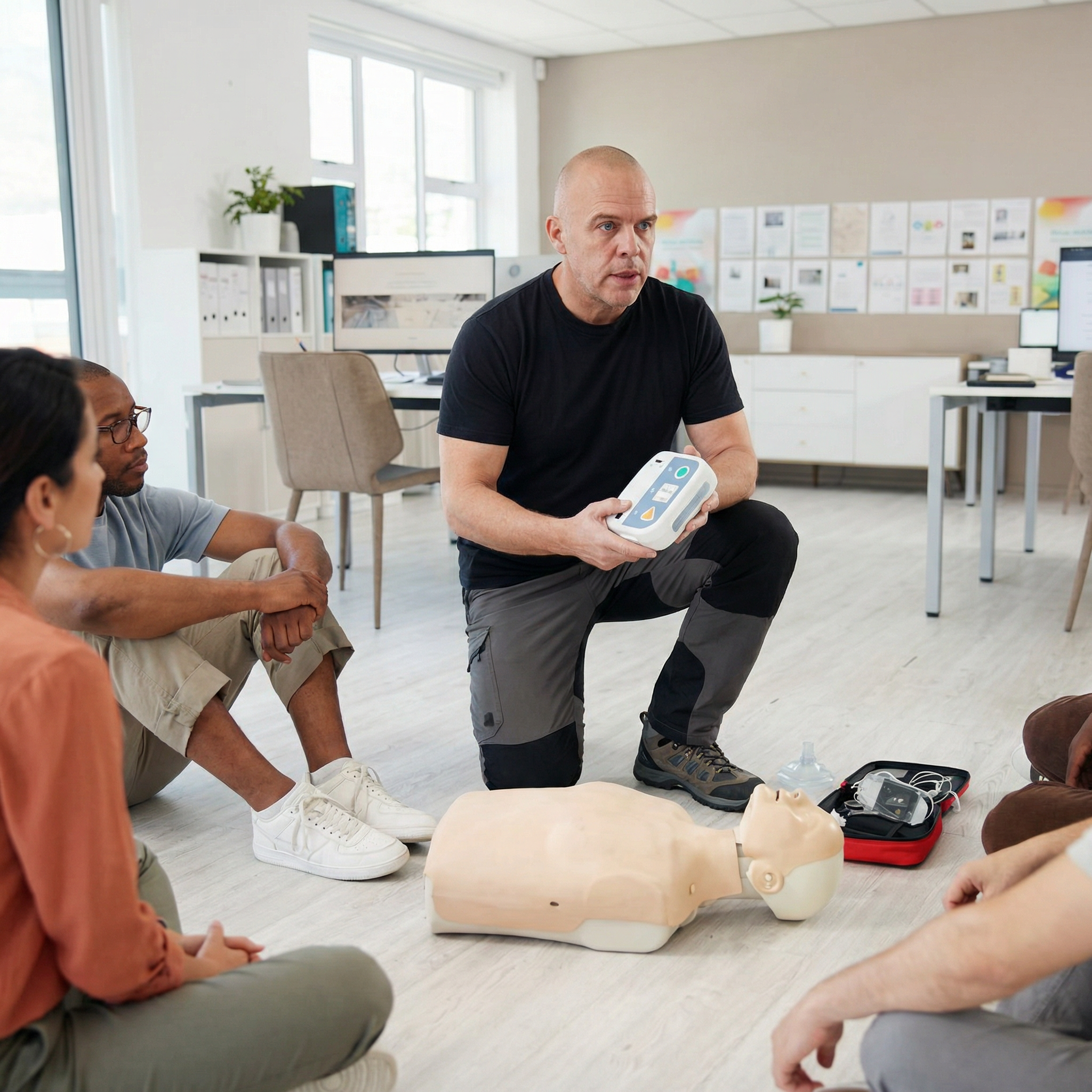
Emergency First Aid at Work (EFAW)
Duration: 1 Day (8 Hours)
The Emergency First Aid at Work (EFAW) course is a condensed, high-impact program designed to equip individuals with the essential skills to manage life-threatening emergencies in the workplace.
Over a single day, the training focuses on high-priority interventions, including scene assessment, performing effective CPR, using an AED, and managing an unconscious casualty. Participants also learn to handle acute situations such as heavy bleeding, choking, and shock.
It is the primary qualification for designated first aiders in low-risk environments, focusing heavily on the "muscle memory" required to remain calm and effective until emergency services take over.
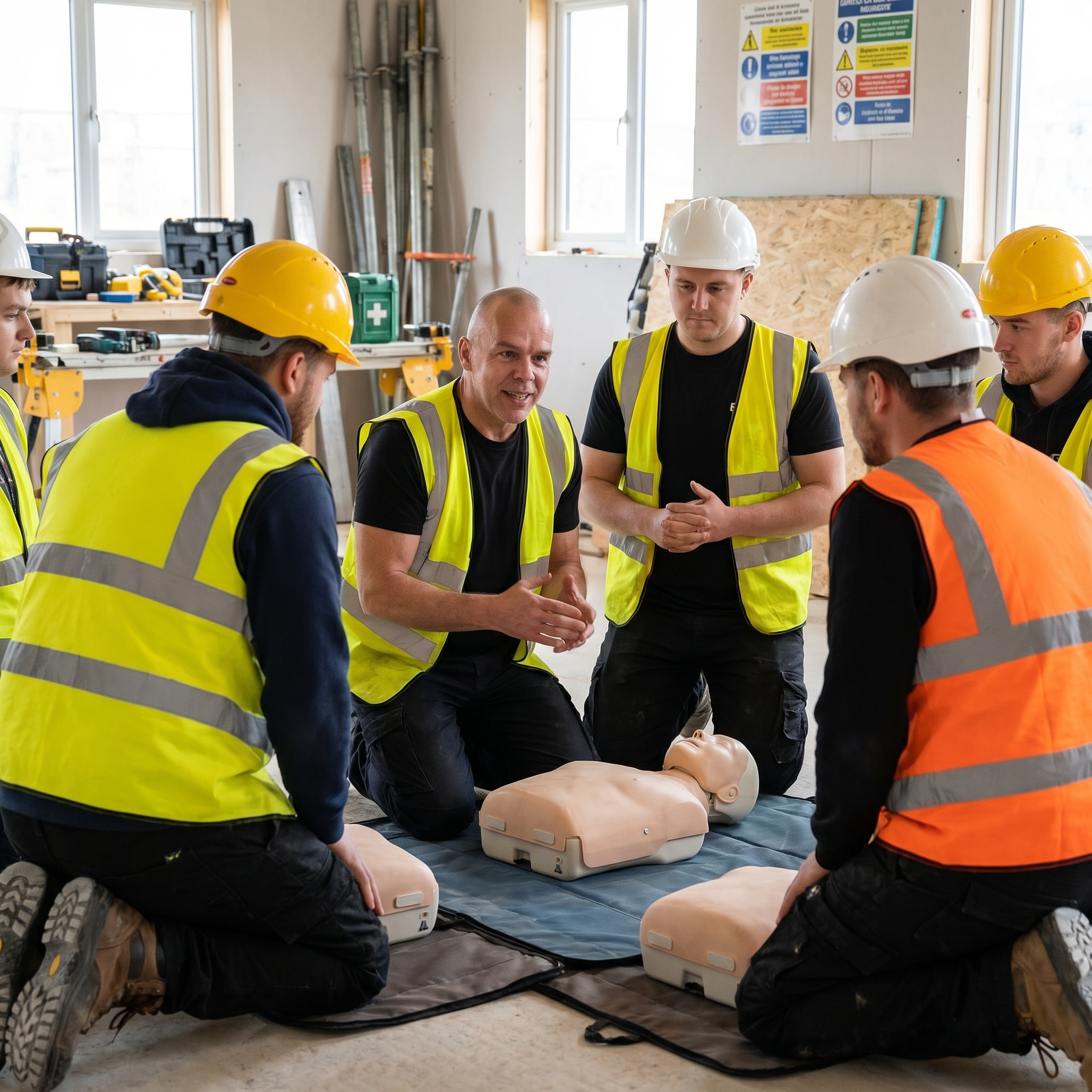
First Aid at Work (FAW)
Duration: 3 days (18 Hours)
The First Aid at Work (FAW) qualification is a comprehensive, in-depth program designed to provide individuals with a thorough understanding of first aid protocols and the confidence to lead in complex medical emergencies.
Spanning three days, this extensive training covers the full EFAW syllabus while expanding into more advanced clinical care. Participants will master the management of injuries to bones, muscles, and joints, as well as the treatment of chest injuries, burns, eye injuries, and sudden poisoning. The course also focuses on identifying and responding to major illnesses, such as heart attacks, strokes, and anaphylaxis.
This is the "gold standard" qualification for designated first aiders in higher-risk or larger-scale environments. It ensures complete compliance with HSE requirements, equipping your team with the advanced practical skills and technical knowledge necessary to safeguard lives in any workplace setting.
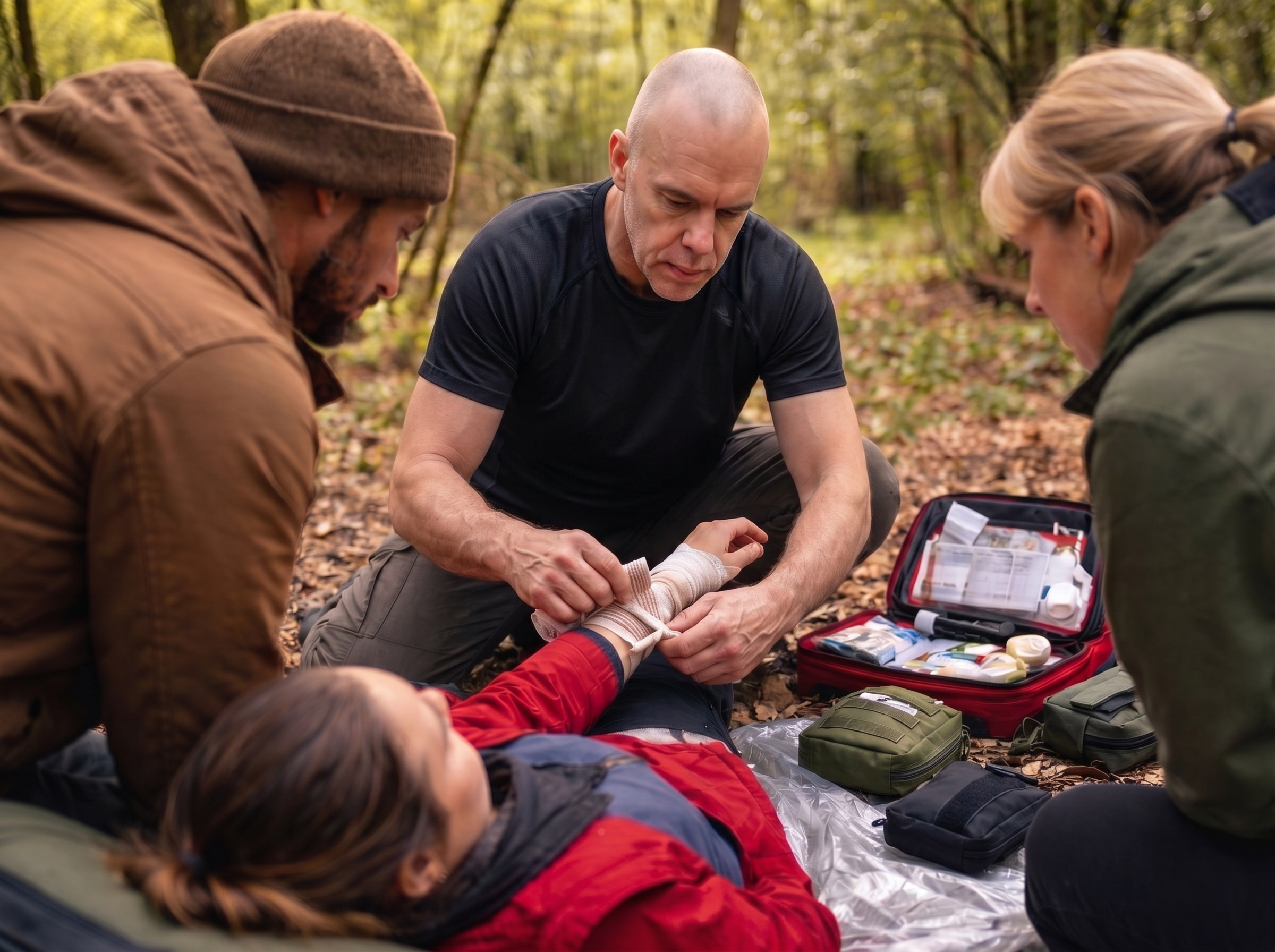
outdoor First Aid
Duration: 2 days (16 Hours)
The 16-Hour Outdoor First Aid course (often referred to as the REC or ITC Level 3 syllabus) is a comprehensive, two-day program designed for those who work or recreate in remote areas where professional medical help may be delayed.
Unlike standard workplace training, this course focuses on prolonged casualty care and incident management in challenging environments. Participants move beyond the basics to master advanced stabilization techniques for fractures, head and spinal injuries, and environmental emergencies like hypothermia and heat exhaustion.
The training is heavily scenario-based and often conducted outdoors, ensuring that leaders, coaches, and enthusiasts develop the practical confidence to use limited equipment and improvised tools to save lives in the wild.